We earn a commission if you buy through our links, at no extra cost to you.
Comparison
Best Soundbars of 2026: 10 Picks for Every TV and Room
We compared the published specs of 10 soundbars, from Sonos, Samsung, Bose and JBL to budget and PC models, and ranked them by TV size, room and use.
B By the Best Soundbar Guide editorial team ·Published
At a glance
Most people with a mid-size or large TV should start with the Sonos Arc Ultra: Dolby Atmos from a single bar that can add a subwoofer and rear speakers later. The Samsung HW-Q990F puts a subwoofer and rear speakers in the box, and the Bose Smart Ultra Soundbar focuses on clear dialogue and a tidy single-bar design.
A good soundbar is one of the simplest upgrades you can make to a TV, because most flat panels have thin speakers that struggle with dialogue and bass. The harder part is choosing among bars that range from a 23-inch dialogue booster to an 11.1.4-channel system with rear speakers. This ranking rests on published specifications, not on our own use of the products. We compared the specs from the manufacturers and independent outlets, read the sources listed at the end and ranked ten models by who each one suits. Where a source does not state a figure, we say so instead of guessing. We show no prices because they change daily, so use the Amazon buttons for the current one.
How We Chose
Six questions sort the field quickly, and they matter more than any model name.
TV size and shelf width. A 46-inch bar looks right under a 65-inch TV and awkward under a 40-inch one. Compare the bar’s width with your stand before anything else.
Subwoofer. A separate subwoofer adds bass that a thin bar cannot produce. Some models include one, others let you add one later, and a few do not support one at all.
Dolby Atmos and how it is done. Atmos support does not guarantee real height speakers. Some bars have up-firing drivers that bounce sound off the ceiling, and others process the height effect without them. We flag which is which when the sources say so.
TV connection. Most living-room bars connect over HDMI eARC or ARC. Atmos from streaming apps generally needs eARC. Desk bars use USB or Bluetooth instead.
Room and use. A bedroom, an apartment, a large family room and a gaming desk need different bars.
Ecosystem and extras. Wi-Fi, AirPlay 2, voice assistants and room calibration matter if you also play music through the bar. They matter less if you only want clearer dialogue.
The ranking is our own judgment of how broadly each bar fits typical buyers, based on published specs and what outlets said about it. It is not a measurement, and a lower rank does not mean a bad product: a desk soundbar is the right answer for a desk, even at number 10.
Comparison Table
#
Model
Channels
Subwoofer
Dolby Atmos
TV / PC connection
Best for
1
Sonos Arc Ultra
9.1.4 per Sonos (14 drivers)
Not included, Sonos Sub optional
Yes, with up-firing drivers
HDMI eARC, Wi-Fi 6, Bluetooth 5.3, AirPlay 2
Large TVs and a growing Sonos system
2
Samsung HW-Q990F
11.1.4 per SoundGuys
Included, wireless
Yes, wireless Atmos with compatible Samsung TVs
HDMI eARC and two HDMI 2.1 inputs, optical, Wi-Fi, Bluetooth
Big rooms and Samsung TVs
3
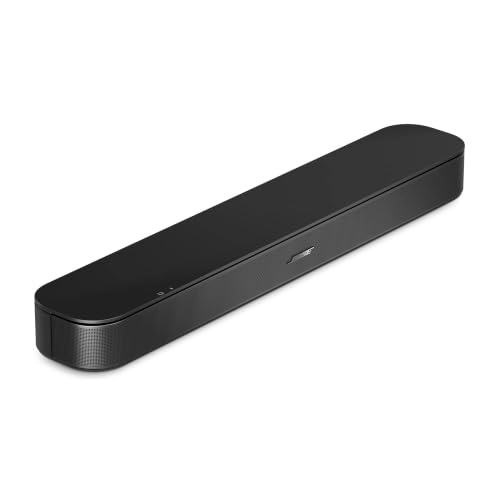
Bose Smart Ultra Soundbar
Nine speakers per Bose
Not included, bass module optional
Yes, two up-firing speakers
HDMI eARC, optical, Wi-Fi, Ethernet, Bluetooth
Clear dialogue in mid-size rooms
4
JBL Bar 500MK2
5.1
Included, 10-inch wireless
Yes, height likely processed
HDMI eARC, one HDMI input, optical, Wi-Fi, Bluetooth
Bass and features at a mid-range level
5
Sonos Beam (Gen 2)
Five amplifiers, 25.6-inch bar
Not included, Sonos Sub optional
Yes, virtual
HDMI eARC, Ethernet, Wi-Fi, AirPlay 2
Small and mid-size TVs
6
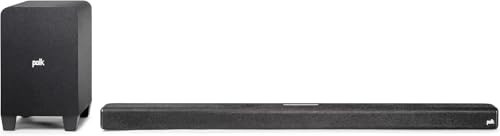
Polk Signa S4
3.1.2
Included, wireless 5.9-inch
Yes, with up-firing drivers
HDMI eARC, optical, 3.5 mm, Bluetooth
Simple, no-fuss bar and sub set
7
Bose TV Speaker (2nd Gen)
Compact bar, no surround mode listed
None
Not listed by Bose
HDMI ARC, optical, Bluetooth
Bedroom and small TV dialogue
8
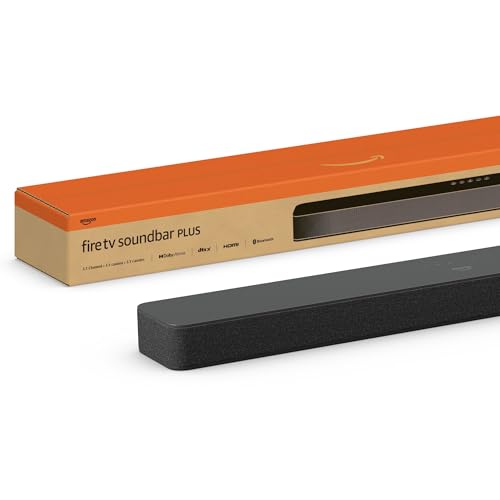
Amazon Fire TV Soundbar Plus
3.1
Built-in subwoofers
Yes, virtual
HDMI eARC/ARC, optical, USB, Bluetooth
Simple setup for a mid-size TV
9
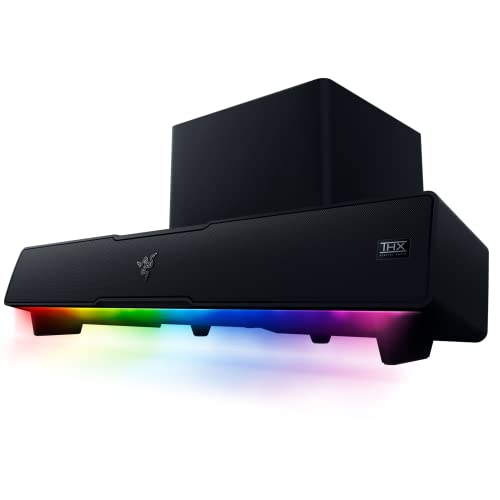
Razer Leviathan V2
Soundbar plus down-firing sub
Included
No Atmos; THX Spatial Audio on Windows
USB, Bluetooth 5.2
Windows gaming desks
10
Razer Leviathan V2 X
Two drivers, two passive radiators
None
No Atmos
USB Type-C, Bluetooth 5.0
Compact laptop and monitor desks
1. Sonos Arc Ultra — The Premium Pick for Large TVs
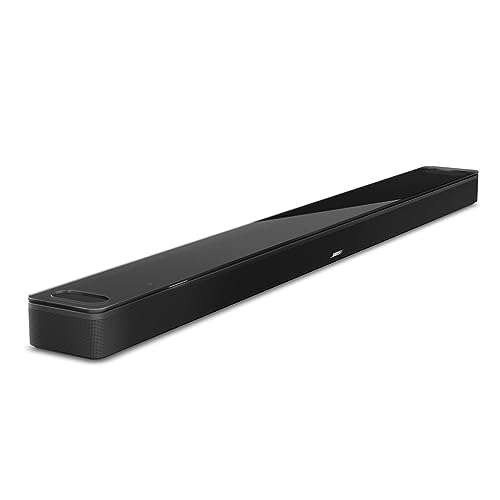
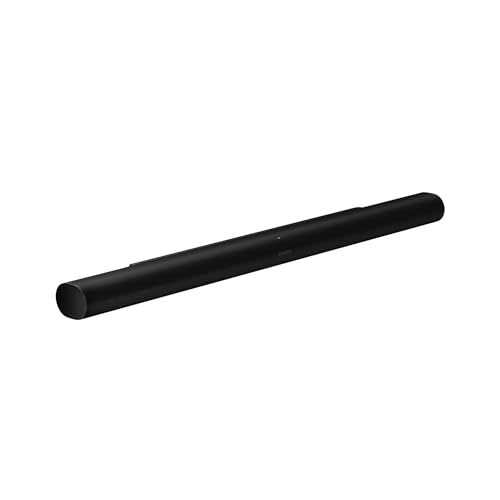
According to Sonos, the Arc Ultra uses 14 drivers, including two upward-firing tweeters and a new Sound Motion woofer, to deliver what Sonos calls a 9.1.4 Dolby Atmos experience from a single bar. It supports HDMI eARC, Wi-Fi 6, Bluetooth 5.3 and AirPlay 2, and it syncs with your TV remote. It also works as a music speaker when the TV is off, and Sonos says it can send TV audio to Sonos Ace headphones.
It ranks first because it combines the strongest single-bar Atmos hardware in this group with a clear upgrade path: you can add a Sonos Sub and Era 300 rear speakers later. The trade-offs are real. There is no subwoofer in the box, and at more than 46 inches wide it overwhelms small TVs and short shelves. Read the details in our Sonos Arc Ultra profile, or check the current price on Amazon.
2. Samsung HW-Q990F — The Full Home Theater in a Box
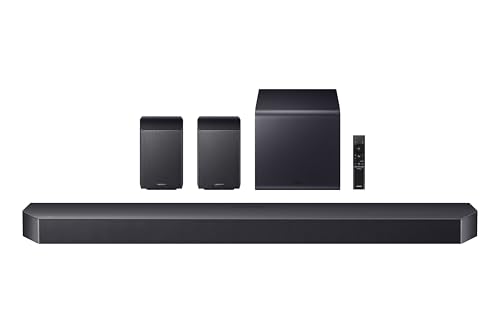
The HW-Q990F is a complete system rather than a bar. SoundGuys lists it as 11.1.4-channel with 15 drivers and four up-firing speakers, and Notebookcheck reports a new subwoofer with dual 8-inch drivers, a claimed 300W and bass down to 32Hz, plus wireless rear speakers. Two HDMI 2.1 ports pass 4K at 120Hz, which helps game console owners.
It sits second because it gives real surround channels without further purchases, and it is the most obvious match for large rooms and big screens. It is also the most demanding to place: the bar is roughly 48 inches wide and you must find spots for a sub and two rear speakers. Notebookcheck notes that wireless Dolby Atmos and Q-Symphony work with compatible Samsung TVs, so it makes the most sense in a home with a Samsung TV. See the Samsung HW-Q990F profile or its Amazon page.
3. Bose Smart Ultra Soundbar — Clear Dialogue in One Tidy Bar
Bose lists nine speakers, two of them upward-firing, plus TrueSpace processing that upmixes stereo and 5.1 signals to add a sense of height. The standout feature is A.I. Dialogue Mode, which Bose says senses speech and balances voices against surround effects. It also includes ADAPTiQ room calibration with a headset, and it supports AirPlay 2, Chromecast and Spotify Connect over Wi-Fi.
We rank it third because it is a polished single-bar choice, but it asks for compromises. Bose says it has no HDMI video passthrough, so every source plugs into the TV, and Bose suggests a room of about 12 by 14 feet. The bass modules and surround speakers are sold separately. It suits mid-size living rooms where voices matter most. More in the Bose Smart Ultra Soundbar profile and on Amazon.
4. JBL Bar 500MK2 — Subwoofer Included, Mid-Range Features
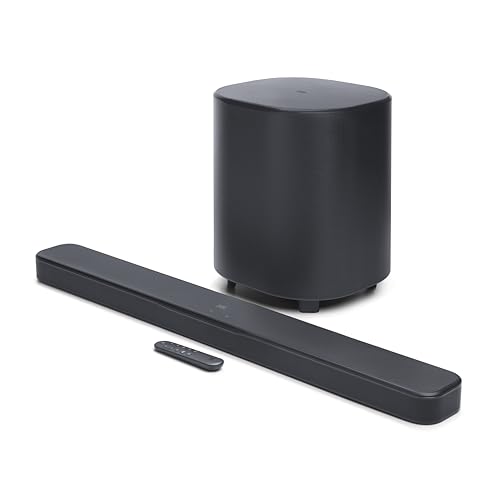
SoundGuys and T3 list the Bar 500MK2 as a 5.1-channel bar with Dolby Atmos support, 750W of total power and a 10-inch wireless subwoofer in the package. SoundGuys also lists HDMI eARC, one HDMI input, optical, Wi-Fi and Bluetooth 5.3, and T3 says the MK2 range supports AirPlay 2, Google Cast and Spotify Connect.
It lands fourth as the most value-minded package in the middle of the ranking: a real sub and a useful set of inputs without stepping up to a premium system. The sources do not list dedicated up-firing height drivers, so we treat the Atmos height as processed. SoundGuys says it is not expandable with rear speakers, and DTS:X was reported as arriving by update, so check current support. Our JBL Bar 500MK2 profile has the details, and the Amazon page shows current options.
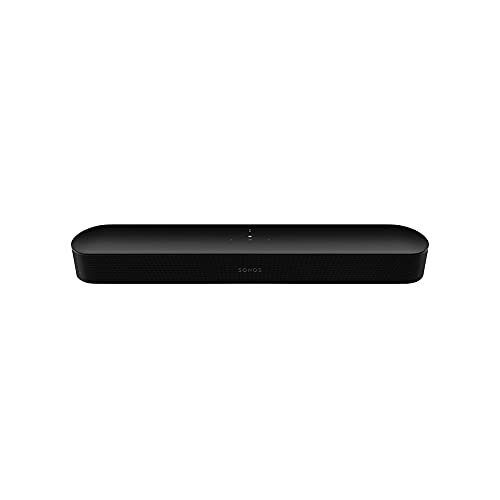
The Beam (Gen 2) is 25.63 inches wide, with five Class-D amplifiers, a center tweeter, four midwoofers and three passive radiators, per Sonos. It supports Dolby Atmos with HDMI eARC, Wi-Fi, Ethernet and AirPlay 2, and works with Sonos Voice Control, Alexa and Google Assistant. Sonos says it is made for TVs up to about 65 inches.
It ranks fifth because it is the best fit for small and mid-size rooms in a group where most bars are 37 inches or wider. Its Atmos height effects are virtual, since the spec list shows no up-firing drivers, and the Sonos feature list shows no Bluetooth. You can add a Sonos Sub and rear speakers later. See the Sonos Beam (Gen 2) profile or the Amazon listing.
Polk describes the Signa S4 as a 3.1.2-channel, Dolby Atmos certified system with two 2.6-inch up-firing drivers, a 41.2-inch bar and a wireless subwoofer with a 5.9-inch woofer. Inputs are HDMI eARC, optical, 3.5 mm analog and Bluetooth, and Polk’s VoiceAdjust and BassAdjust controls tune dialogue and bass. The box includes both cables, a wall mount template and spacers.
It ranks sixth because it focuses on sound and ease of setup over smart features. There is no Wi-Fi, so no built-in streaming or multiroom, only Bluetooth. Atmos works only over HDMI eARC, and the bar is too wide for small TVs. Polk’s page is inconsistent about the driver count, so rely on the spec list. Details are in the Polk Signa S4 profile, and you can see the current price on Amazon.
7. Bose TV Speaker (2nd Gen) — A Small Fix for Muddy Dialogue
Bose says the TV Speaker (2nd Gen) is 23.465 inches wide and 2.244 inches high, with full-range speakers, a dedicated center-channel tweeter and a Dialogue Mode that separates voices from background audio. It connects through HDMI ARC with HDMI-CEC, optical (cable sold separately) or Bluetooth, and it ships with a small remote.
It ranks seventh because it does one job: clearer speech from a small, simple bar. Bose’s page lists no Dolby Atmos or surround mode, no subwoofer, no Wi-Fi, no voice assistant and no microphone, so it is not a home theater system. For a bedroom, den or apartment TV where you want less setup, that can be exactly right. Read the Bose TV Speaker (2nd Gen) profile, or open it on Amazon.
8. Amazon Fire TV Soundbar Plus — Easy Setup, Mixed Sound Opinions
Notebookcheck describes the Fire TV Soundbar Plus as a roughly 37-inch, 3.1-channel bar with built-in subwoofers, Dolby Atmos, DTS:X and a dedicated dialogue channel. Connections are HDMI eARC/ARC, optical, USB and Bluetooth, and it has Movie, Music, Sports and Night modes. Despite the name, it has no Fire TV software, no Alexa and no app.
We rank it eighth because published opinions are divided. TechRadar called it a solid bar at a decent price in the surround configuration it covered, while What Hi-Fi found the sound thin and shrill and worse than most TV speakers. Atmos is virtual here, with no up-firing drivers. Choose it if simple setup and a wide bar matter, and compare it with the Polk and JBL picks first. See the Amazon Fire TV Soundbar Plus profile and its Amazon page.
9. Razer Leviathan V2 — The Desktop Gaming Soundbar
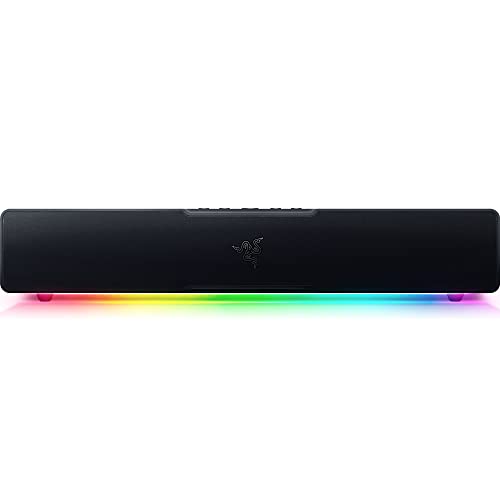
Razer’s page describes the Leviathan V2 as a multi-driver PC soundbar with a down-firing subwoofer, Chroma RGB with 18 lighting zones and THX Spatial Audio, which Razer calls 7.1 virtual surround. It connects by USB audio to a PC and by Bluetooth 5.2 to phones, tablets and the Nintendo Switch.
It sits ninth only because most readers shop for a TV. For a Windows gamer it is the better desk option: you get a sub and a single bar under the monitor. THX Spatial Audio is Windows-only and needs Razer Synapse, and Razer lists no HDMI, optical or aux input, so it does not fit a living-room TV. See the Razer Leviathan V2 profile or the Amazon page.
10. Razer Leviathan V2 X — The Smallest Desk Option
Razer says the Leviathan V2 X is about 15.7 inches (400 mm) long and the most compact bar in the Leviathan V2 range. It has two full-range drivers and two passive radiators, a single USB Type-C cable for power and audio, Bluetooth 5.0 and Chroma RGB with 14 zones. Razer lists a 90 dB output at about 3.3 feet (1 m).
It ranks last because it is the most specialized: no subwoofer, only USB-C and Bluetooth, and no THX Spatial Audio. It is a tidy way to lift laptop or monitor audio when desk space is tight and deep bass is not the goal. Our Razer Leviathan V2 X profile has the rest, and the Amazon listing shows current options.
Picks by Use and Budget
These are our suggestions, in the same order as the ranking.
Large TV, premium system: the Sonos Arc Ultra for a single bar you can grow, or the Samsung HW-Q990F if you want the sub and rears in the box.
Clear dialogue in a mid-size room: the Bose Smart Ultra Soundbar.
Mid-range with a subwoofer included: the JBL Bar 500MK2 for features, or the Polk Signa S4 for simplicity.
Small or mid-size TV: the Sonos Beam (Gen 2), or the Bose TV Speaker (2nd Gen) for the smallest footprint and the simplest setup.
Easy setup for a mid-size TV: the Amazon Fire TV Soundbar Plus, with the sound caveats above.
Gaming desk: the Razer Leviathan V2 if you want a sub, or the Razer Leviathan V2 X if space is tight.
On budget, think in rough tiers rather than exact figures. The Sonos Arc Ultra, Samsung HW-Q990F and Bose Smart Ultra Soundbar are premium. The JBL Bar 500MK2, Sonos Beam (Gen 2), Polk Signa S4 and Bose TV Speaker sit in the middle, and the Fire TV Soundbar Plus and the two Razer bars are the entry-level choices. A budget under $500 is realistic for a bar and sub if you do not need premium extras.
Before You Buy
Measure your stand and TV. Compare each bar’s width and height with your space, and make sure the bar does not block the TV’s remote sensor.
Check your TV’s HDMI port. For Atmos from streaming apps you generally need HDMI eARC. Turn on audio pass-through in the TV settings.
Decide on a subwoofer. If you want bass you can feel, favor a bar with a sub in the box or add one to a Sonos or Bose bar.
Plug sources into the TV. Several of these bars have a single HDMI port and no video passthrough, so streaming boxes and consoles connect to the TV.
Plan your room. Rear speakers and subwoofers need power outlets, so think about cable runs before you choose a full system.
Our Conclusion
For most buyers with a mid-size or large TV, the Sonos Arc Ultra is our first choice, with the Samsung HW-Q990F as the complete-system alternative for big rooms. The Bose Smart Ultra Soundbar suits those who put dialogue first, and the JBL Bar 500MK2 offers a sub at a mid-range level. The Sonos Beam (Gen 2) and the Polk Signa S4 cover smaller rooms and simpler setups, and the Bose TV Speaker (2nd Gen) is the smallest fix for muddy dialogue. The Amazon Fire TV Soundbar Plus is easy to set up but divides critics, and the two Razer bars are for desks. Whatever you choose, measure first and check the connection on your TV.
We rank the Sonos Arc Ultra first for larger TVs: Sonos describes 14 drivers and a 9.1.4 Dolby Atmos experience from one bar, and it can grow with a Sonos Sub and rear speakers. For smaller TVs, the Sonos Beam (Gen 2) is the compact alternative.
Do I need HDMI eARC for a soundbar?
For Dolby Atmos from streaming apps, usually yes. Sonos says Atmos and the lossless formats need an HDMI eARC connection, and Polk says the same about the Signa S4. Check that your TV has a port labeled HDMI eARC, or at least ARC, and that pass-through is turned on in the TV audio settings.
Does a soundbar with a subwoofer matter?
A separate subwoofer adds low-frequency impact that a thin bar cannot fully deliver. The Samsung HW-Q990F, JBL Bar 500MK2 and Polk Signa S4 include one. The Sonos and Bose single bars can add one later, and the Sonos Arc Ultra and Bose Smart Ultra Soundbar do not include one.
Can I use a soundbar with a computer monitor?
Only if the soundbar accepts the connection your computer offers. Monitors rarely pass audio back over HDMI ARC. Razer lists USB and Bluetooth for the Leviathan V2 and USB-C and Bluetooth for the Leviathan V2 X, which is why they suit desks and not living-room TVs.
Which soundbar is best for a bedroom or small TV?
Look at width first. The Bose TV Speaker (2nd Gen) is about 23.5 inches wide and the Sonos Beam (Gen 2) about 25.6 inches, according to the makers. Both are far shorter than 46-inch bars like the Sonos Arc Ultra.
Are the Dolby Atmos soundbars on this list real Atmos?
They support the Dolby Atmos format, but height effects are produced differently. Sonos, Bose and Polk describe up-firing speakers on the Arc Ultra, Smart Ultra Soundbar and Signa S4. The Sonos Beam (Gen 2), JBL Bar 500MK2 and Fire TV Soundbar Plus list no up-firing drivers, so their height effect is likely processed.